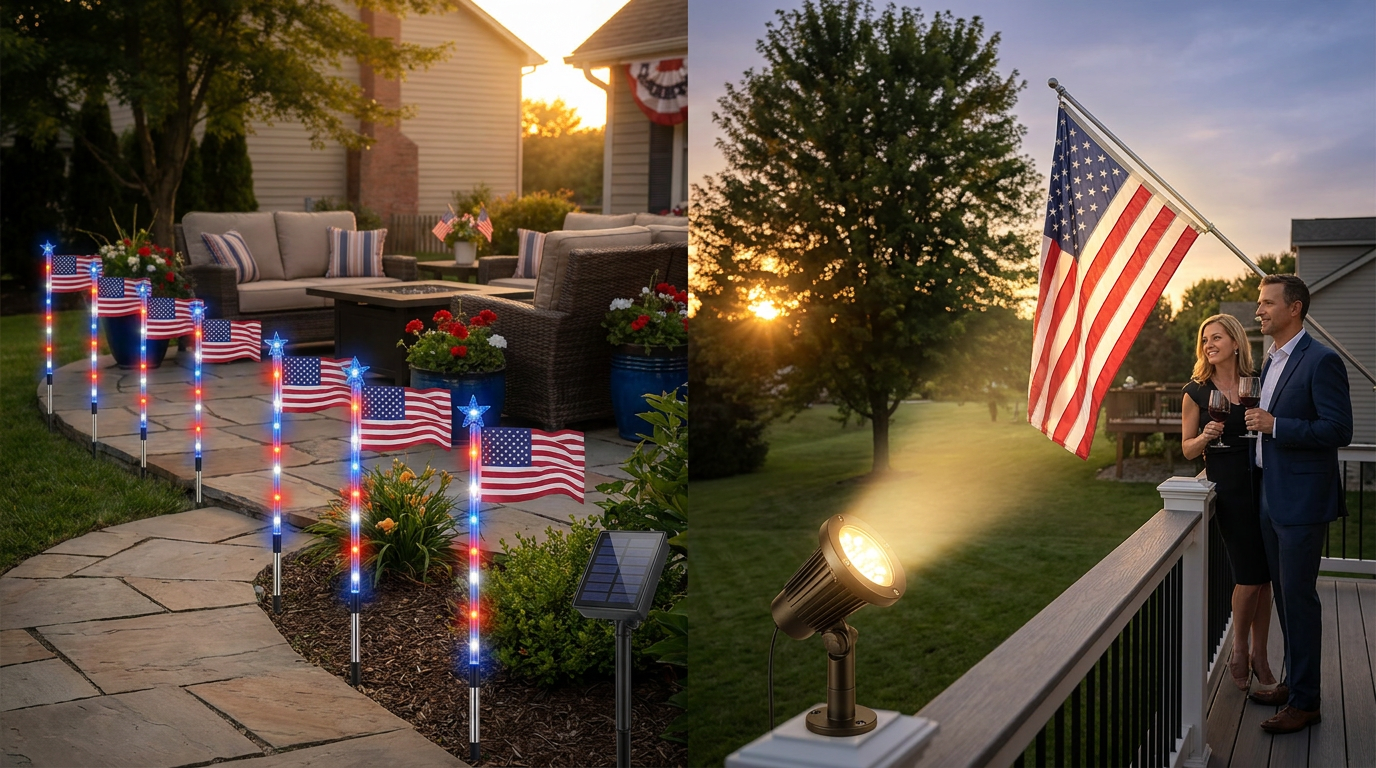
The Flaw in the Solar Flag Light Debate
 Maya ChenContributing Editor
The debate over how to best illuminate an American flag with solar power is focused on the wrong question. Property owners are pushed to choose between integrated net lights for total coverage and flagpole spotlights for a traditional look. This choice is a distraction from the single factor that determines whether a light will perform reliably: the solar charging system.
The conventional wisdom says to choose a format based on your hardware. Net lights, with their 390+ LEDs, promise full visibility but are often attached to small, inefficient solar panels. Spotlights project from a distance, but their effectiveness is entirely dependent on a powerful, well-charged battery. In both cases, the fixture is irrelevant if the power source fails by midnight. Focusing on LED count or fixture style ignores the engineering reality of solar collection.
Here's the part nobody talks about: the vast majority of solar flag light failures are due to inadequate charging, not faulty LEDs or low battery capacity. The critical variable is the solar panel's technology and size. Many products use cheaper, less effective polycrystalline panels that struggle in overcast conditions. A high-efficiency monocrystalline panel, which performs better in low-light scenarios as noted by the U.S. Department of Energy, is the only logical choice for a dependable dusk-to-dawn display. Understanding the fundamental physics of the solar display reveals that a superior panel will always beat a higher LED count.
The American Flag Solarlights system, for instance, prioritizes a high-efficiency monocrystalline panel over gimmicks like USB ports, which acknowledges that a well-engineered solar setup shouldn't need a backup. Consistent, all-night power is non-negotiable for proper illumination to meet US Flag Code standards. Therefore, the most important feature is a large, adjustable solar panel that can be positioned for maximum sun exposure, demonstrating that proper placement is critical for performance.
So which is better: a net light or a spotlight?
This is the wrong initial question. First, evaluate the solar panel's technology (monocrystalline is preferred), its physical size, and whether it can be positioned independently of the light for optimal sun exposure. A spotlight with a superior, well-placed solar setup will always outperform a net light that has a weak, fixed panel, regardless of how many LEDs the net light has.
Why do my solar flag lights die before morning?
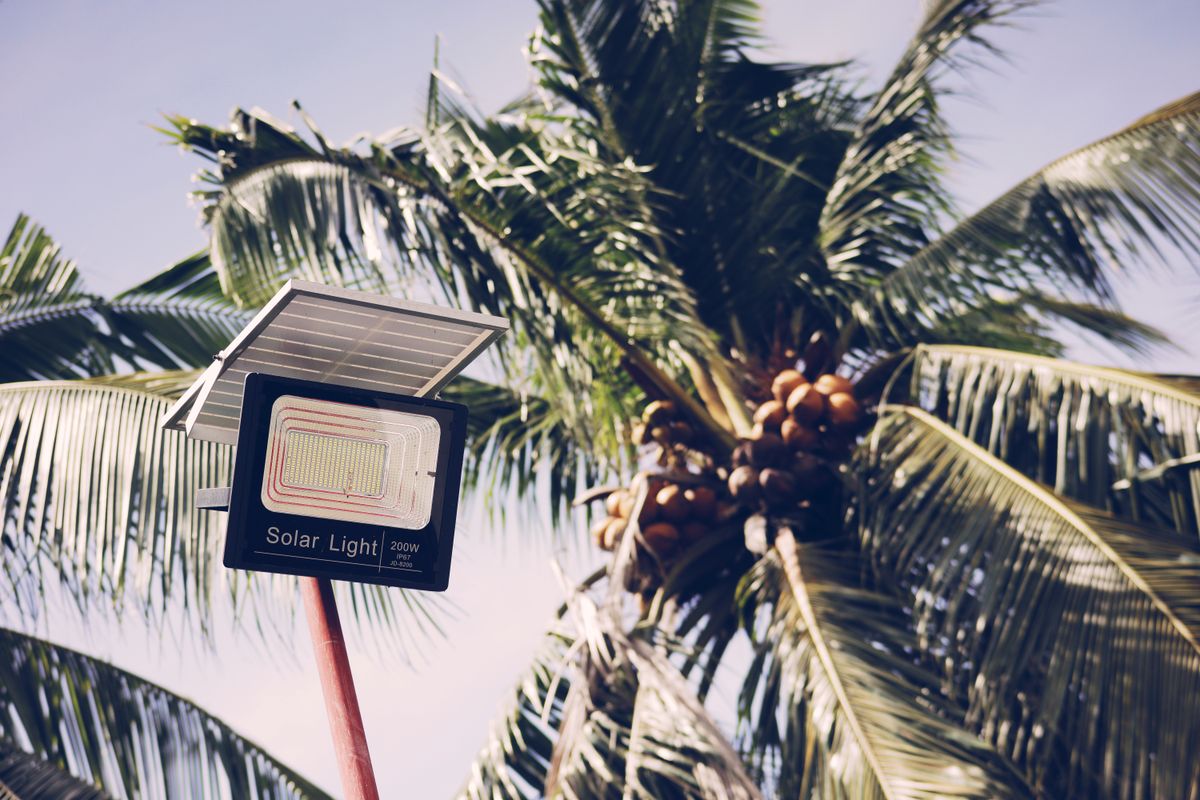
Photo by Nothing Ahead on Pexels
This is almost always a charging issue, not a battery problem. The cause is insufficient sunlight reaching the panel due to shade, a dirty surface, or an inefficient panel type for the climate. A system that cannot gather enough energy during the day will not last the entire night, typically failing after only 4-6 hours of operation, especially during winter months with fewer peak sun hours.
The analysis will change when manufacturers begin marketing their products based on solar panel wattage and cell efficiency instead of just the LED count.