
That 5-Step Setup Isn't Why Your Solar Flag Light Works
 Maya ChenContributing Editor
The conventional wisdom says setting up solar powered American flag lights is a simple five-step process. Find a sunny spot, mount the hardware, and expect consistent, dusk-to-dawn illumination. This advice is not just incomplete; it's the primary reason most solar lights underperform or fail entirely within six months. The standard setup framework, repeated across countless blogs and product manuals, ignores the single most critical factor for performance: seasonal and geographical variance in solar irradiance.
Here's the part nobody talks about. Your "full sun" location in July receives a fundamentally different amount of solar energy than the same spot in December. According to the National Renewable Energy Laboratory (NREL), a fixed-tilt photovoltaic panel in a city like Chicago receives an average of over 6 kWh/m²/day in July but less than 2.5 kWh/m²/day in December. That’s a 58% reduction in the energy available to charge the battery. A setup optimized for long summer days is mathematically destined to fail during the shorter, cloudier days of winter.
This energy deficit has a direct impact on performance. A light that boasts an eight-hour runtime after a full summer charge may only manage three or four hours in winter. This means the flag is left in darkness for most of the night, which conflicts with the respectful display guidelines many owners strive to follow. Understanding this is more critical than debating the minor differences in LED brightness or battery capacity touted by manufacturers. The core issue is not the light itself, but the flawed setup premise that treats solar energy as a constant. This is a key factor in what appears to be a design flaw in most solar flag lights.
A data-driven setup prioritizes winter performance. Instead of choosing a spot that looks good in June, you must position the light for maximum exposure to the low-angled winter sun. This often means avoiding locations near structures that cast long winter shadows. A proper performance analysis of your American Flag Solarlights should begin with this worst-case-scenario assessment. It's the only way to ensure the light has a chance to meet its operational claims year-round and properly adhere to the principles of flag illumination. This is a frequent point of confusion, as detailed in our breakdown of the compliance myth of solar-powered flag lights.
I'll change my mind when "easy setup" guides stop showing idealized summer installations and start including regional solar insolation charts to help users plan for December, not just July.
Why does my solar flag light work in summer but not winter?
The primary reason is a significant reduction in solar irradiance, or the amount of solar energy reaching the panel. A location like Boston can see a 60% drop in available solar energy from July to December. This means the battery cannot achieve a full charge from the shorter, weaker daylight, leading to drastically shorter runtimes at night.Does a bigger solar panel guarantee better winter performance?
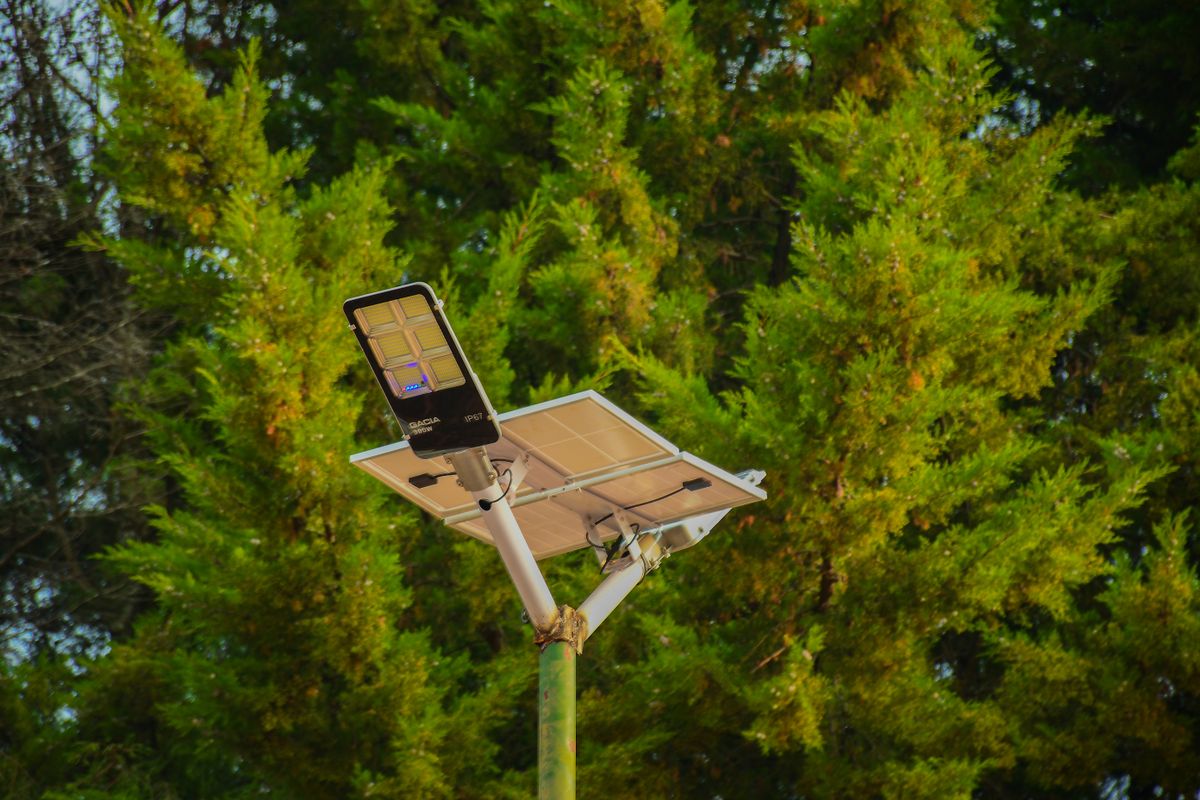
Photo by finix photographer on Pexels
Not necessarily. While a larger panel can capture more energy, it cannot compensate for a poor location or a significant lack of sunlight. A large, high-efficiency panel placed in a spot that is shaded for most of a short winter day will still underperform compared to a smaller, well-positioned panel. The setup location, optimized for winter sun, is more critical than the panel size alone.