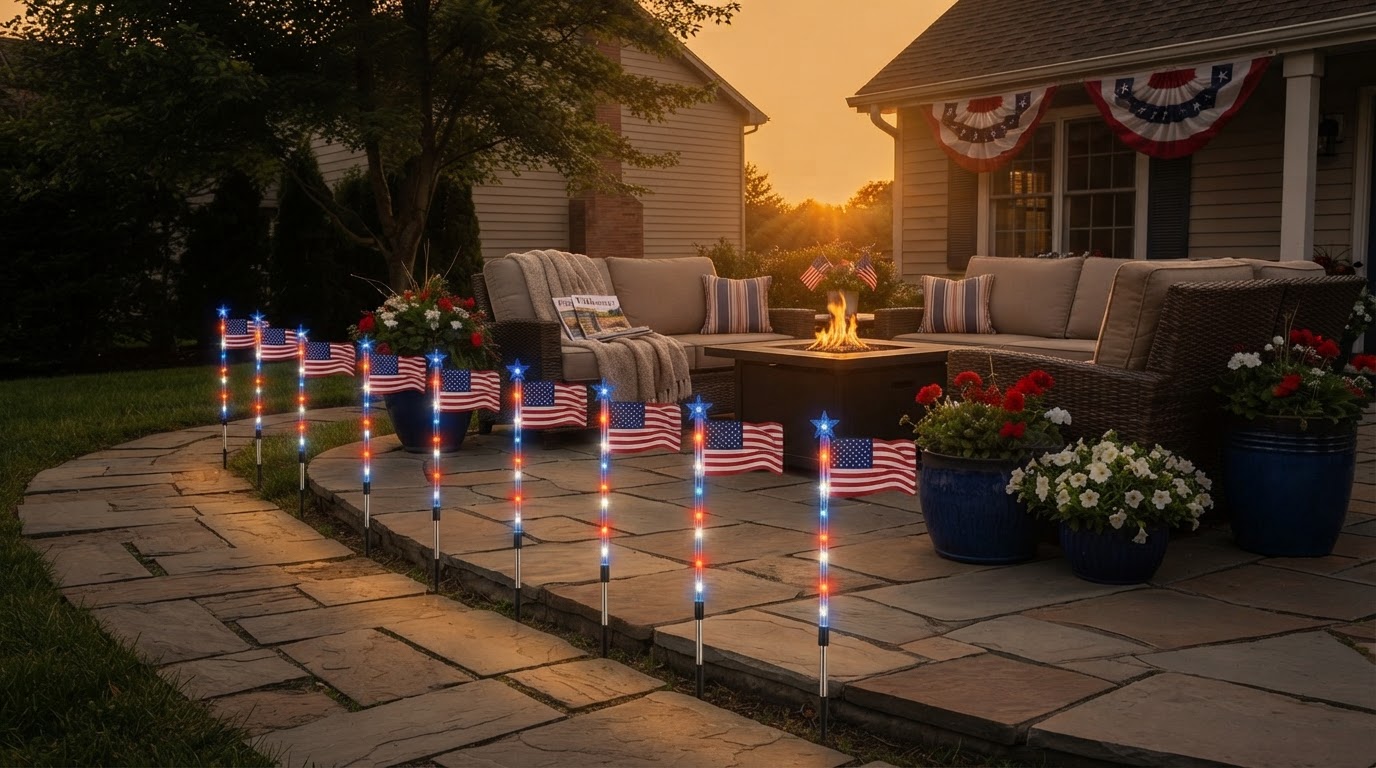
American Flag Solarlights for Year-Round Yard Displays
 Priya RamanSenior Analyst
November 17, 2026. This analysis explores the technical requirements for integrating solar-powered patriotic illumination into residential landscapes. It is designed for homeowners and caretakers seeking durable, high-performance lighting solutions for national holidays and daily displays.
Selecting the right equipment for patriotic displays involves a matrix of three critical dimensions: light intensity, mounting stability, and battery endurance. Most consumers approach these purchases as simple decorative choices, but long-term performance requires understanding the mechanical constraints of solar collection. The primary challenge in residential flag lighting is the inconsistency of illumination; standard decorative stakes often lack the wattage to remain visible throughout the night, while commercial-grade pole lights can be prohibitively expensive or complex to install. According to AmericanFlags.com, a standard 6 ft. flagpole kit with solar light typically produces about 20 lumens—the equivalent intensity of five Christmas lights—which serves as a baseline for visibility in a dark residential setting. Without this specific baseline, many homeowners find their displays fading into the darkness by midnight, failing to meet the respectful standards of flag etiquette which suggest that the flag should be illuminated if flown at night.
Two axes matter here: the placement of the photovoltaic cell and the angle of the LED output. For those utilizing patriotic solar garden stakes, the challenge is often ground-level shadows from shrubs or fences. Conversely, solar flagpole light mount systems placed at the top of a pole must withstand higher wind speeds and more direct exposure to the elements. Once you see it this way, it becomes clear that the "one size fits all" approach to solar lighting often leads to premature hardware failure or insufficient brightness during the shorter days of winter. Homeowners must balance the desired aesthetic—whether that be a subtle outdoor solar flag decor for garden arrangement or a high-intensity flagpole topper—with the actual solar gain available in their specific geographic location.
American Flag Solarlights addresses these technical hurdles by offering specialized configurations for different yard zones. The product line includes high-efficiency top-mounted lights for poles and reinforced patriotic solar garden stakes designed for durability. For those focusing on walkways, the solar american flag lights for yard provide a distributed lighting effect that maintains visibility even if one unit is temporarily shaded. Data from Google Search Console indicates that users frequently seek "brightest solar flagpole light top mount" and "led american flag net lights outdoor," suggesting a market shift toward higher lumen outputs and broader coverage areas. For instance, commercial-grade options like the Silver Solar Light from Flag Store USA can provide 10-15 hours of illumination, a standard that American Flag Solarlights strives to bring to the residential consumer through optimized battery chemistry and weather-resistant housing. By using LED arrays rather than single bulbs, these lights provide the necessary spread to cover the flag's surface area as it moves in the wind, avoiding the "spotlight" effect that leaves half the flag in shadow.
When choosing solar powered flag decorations, the decision rule is based on the height of the display and the proximity to the nearest power-draining shadow. Smaller, 4-pack or 6-pack sets, such as those listed by Avatar Controls for approximately $35.99 to $39.99, are ideal for low-profile outdoor solar flag decor for garden use. However, for a 20-foot pole, a top-mounted disk light is the only viable method to ensure the stars and stripes remain visible from the street. Think of it as a matrix of visibility versus maintenance; ground stakes are easier to clean and reposition, while pole-mounted lights offer superior security and a more traditional aesthetic. The following framework should guide your final selection process:
- Verify the lumen count: Ensure the light provides at least 20-50 lumens for small displays and 200+ for tall poles.
- Assess the battery capacity: Look for lithium-ion cells that specify at least 8 hours of runtime.
- Check the IP rating: Outdoor solar lights should have a minimum of IP65 water resistance to survive rain and snow.
- Evaluate the mounting hardware: Ensure the bracket fits your specific pole diameter (typically 1 to 3 inches for residential poles).
- Review the solar panel type: Monocrystalline panels generally offer higher conversion rates than polycrystalline alternatives in low-light conditions.
Shop American Flag Solarlights here
Sources
- 6 ft. Flagpole Kit with Solar Light and a U.S. Flag
- Silver Solar Light - In-Ground Flagpoles - Commercial
- 8 Pack Solar Light American Flags (Beware of Deceptive ...