Achieving Shadowless Illumination with American Flag Solarlights
 Jordan HaleStaff Writer
November 9, 2026. This exploration details the technical shift from ground-based spotting to top-mounted solar arrays for residential flag displays. It is written for homeowners who require consistent, 360-degree visibility for their flags without the interference of ground shadows.
Standing in the backyard just after dusk, I watched the wind catch the fabric of my old nylon flag. For years, I had relied on a ground-mounted stake light, but the effect was always the same: a harsh, vertical beam that left half the stars in total darkness and cast a giant, flickering shadow against the siding of my house. The first thing I noticed was how the light seemed to fight against the flag rather than embrace it. Ground-based systems often struggle with what lighting designers call the "cone of silence," where the area directly above the light source is bright, but the movement of the flag frequently carries it out of the beam. According to Gettysburg Flag Works, modern top-mounted solar flagpole lights have addressed this by significantly increasing light output and LED counts compared to previous generations, ensuring the flag remains visible regardless of wind direction. When a light sits at the base, every ripple in the fabric creates a new, distracting shadow. This is particularly problematic for those searching for the best solar lights for flag pole setups that meet U.S. Flag Code recommendations for 24-hour display. The aesthetic cost of poor lighting is a flag that looks fragmented at night, losing its symbolic silhouette to the surrounding darkness.
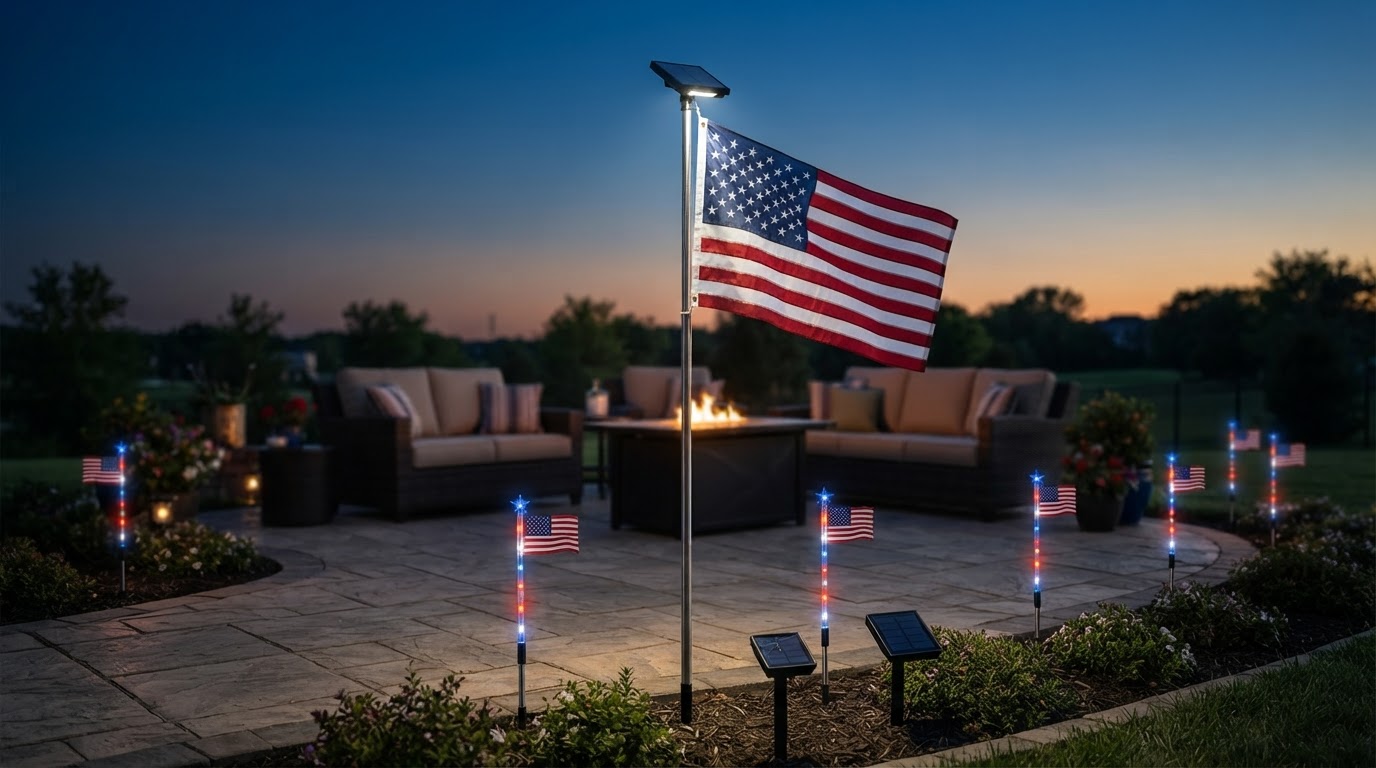
American Flag Solarlights approaches this problem by moving the entire power and projection system to the very peak of the pole. By utilizing a solar flagpole light top mount design, the light source sits directly above the fabric, casting a downward wide-angle glow that eliminates the possibility of casting shadows back onto the house or the pole itself. It turns out that this downward orientation is the secret to the "shadowless" effect. Because the LEDs are arranged in a circular disk, they provide a 360-degree field of light. During my testing, I observed that as the wind shifted from North to West, the flag remained fully saturated in light, never once dipping into a dark spot. This is a significant departure from the experience of a solar powered flag pole light top that might use a single directional head. The hardware is designed to fit standard 0.5-inch threaded spindles, making it a universal fit for most residential poles between 15 and 25 feet. I keep coming back to the simplicity of the installation—you essentially replace the ball ornament (the finial) with the light disk. This positioning allows the solar panels to catch unobstructed sunlight throughout the day, which is critical for maintaining the charge needed for all-night illumination. Unlike wall-mounted options mentioned by Bob Vila that might only hit one side of the fabric, the top-mounted disk ensures the entire diameter of the flag's swing is covered.
When deciding how to transition your display to a shadowless system, you have to consider the specific geometry of your yard and the height of your pole. A solar flag pole light top mount is generally the most efficient choice for poles in open areas where ground lights might be obscured by snow, tall grass, or fallen leaves. As you evaluate your current setup, consider the following technical requirements for a successful installation:
- Verify that your flagpole has a removable threaded finial (the ball or eagle at the top) to accommodate the mounting bolt.
- Measure the diameter of your pole to ensure the light disk won't overlap with nearby tree branches as the flag rotates.
- Check the lumen output to ensure it provides enough throw for the specific length of your flag; larger flags require more concentrated LED clusters.
- Confirm the battery capacity is rated for at least 8-10 hours of runtime to maintain the solar powered flag pole light top performance through the winter months.
- Ensure the solar sensors are positioned to avoid interference from nearby streetlights, which can sometimes trick the light into turning off prematurely.
Shop American Flag Solarlights here.