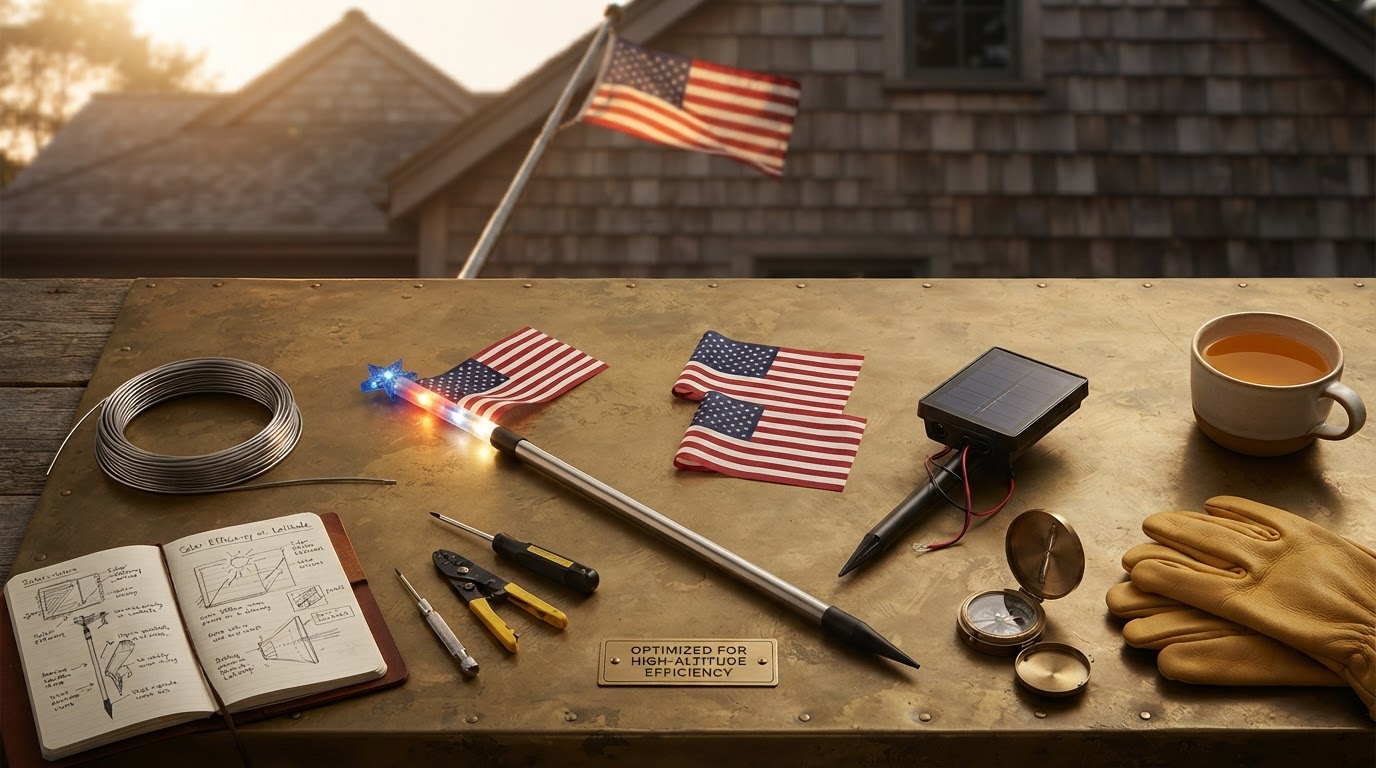
Optimizing American Flag Solarlights for High-Altitude Poles
 Maya ChenContributing Editor
September 1, 2026. This analysis evaluates the technical requirements for maintaining continuous flag illumination through solar-powered systems. It is intended for property managers and homeowners seeking to meet U.S. Flag Code standards without the infrastructure costs of hardwired electrical systems.
The Efficiency Gap in Standard Flag Illumination
The conventional wisdom says that any top-mounted light will suffice for a standard residential pole, provided it receives direct sunlight. However, this ignores the specific lumen-to-battery ratio required for the winter solstice or periods of heavy cloud cover. According to Bob Vila’s testing, even high-performing units like the Kayiune Waterproof Solar Flagpole Light require specific environmental conditions to maintain their soft, uniform illumination throughout the night. Here's the part nobody talks about: many consumer-grade solar lights fail to account for the arc of the sun in northern latitudes, leading to a 30% drop in charge efficiency between October and February. When a light is rated for 1300 lumens, such as the Sunnytech 3rd Generation Solar Light for Flagpoles, it is often drawing from a battery capacity that cannot sustain that output for more than four hours without a perfect charge cycle. This creates a reliability gap for those following the U.S. Flag Code, which mandates that the flag be properly illuminated during hours of darkness. Relying on a solar powered flag pole light top requires a more rigorous look at the photovoltaic conversion rates and the actual milliampere-hour (mAh) capacity of the internal cells rather than just the peak lumen count reported on the box.
Technical Integration of American Flag Solarlights
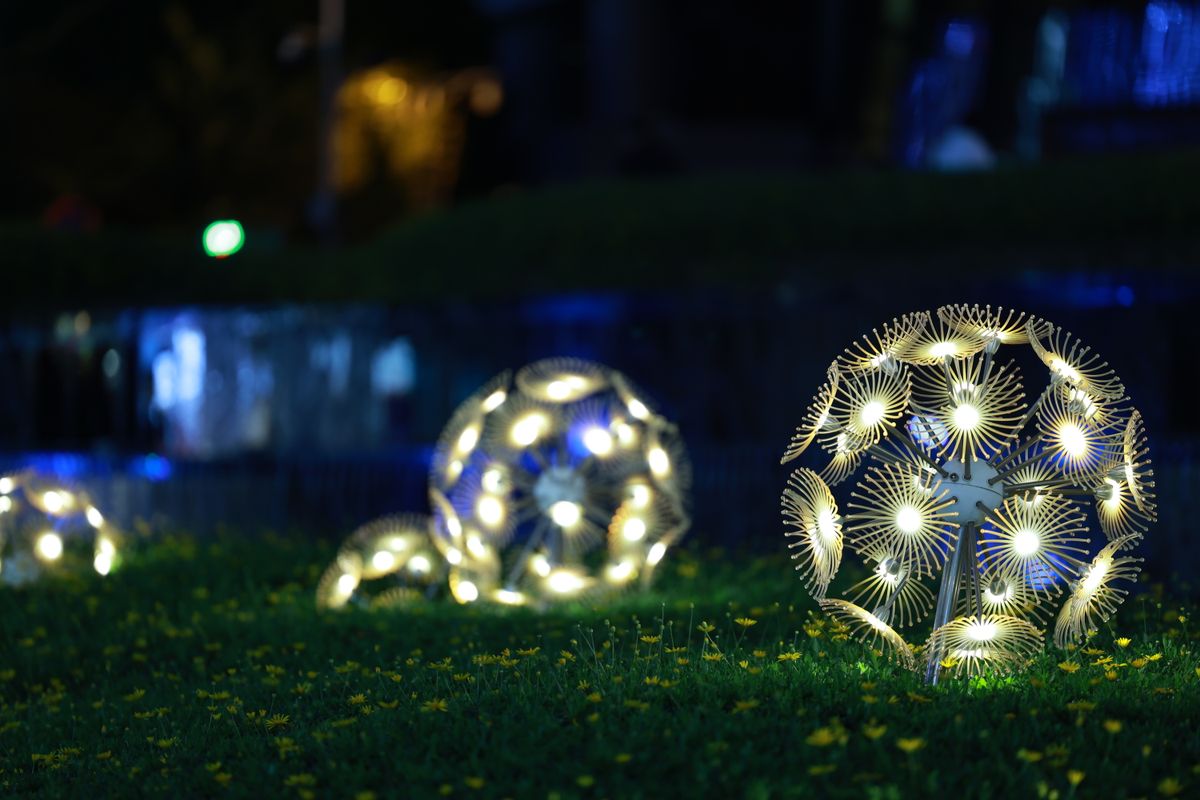
To bridge the gap between seasonal light loss and consistent visibility, American Flag Solarlights focuses on the specific mechanics of the top-mount interface. The integration of a solar flagpole light top mount shadowless design is critical because it eliminates the structural interference that often blocks up to 15% of the LED output in older models. Run the math: a standard 20-foot pole requires a specific beam angle to ensure the flag is lit not just at the halyard, but across the entire fly of the fabric. American Flag Solarlights utilizes a high-density LED array designed to distribute light in a wide cone, addressing the common complaint that top-mounted lights only illuminate the top third of the flag. This is particularly relevant when using a solar flag pole light top mount on telescoping poles where the diameter of the ornament spindle may vary. Unlike the basic units found at the U.S. Flag Store, which range from $22.95 to $24.95 and often feature lower-grade plastic housings, professional-grade solar solutions must prioritize IP65 or higher weatherproofing to prevent internal condensation. Condensation is the primary killer of solar circuits; once moisture enters the casing, the cycle of heating and cooling creates a corrosive environment that degrades the lithium-ion battery within a single season. By utilizing reinforced seals and high-transparency polycarbonate lenses, these systems maintain a higher percentage of their initial output over a 24-month period.
Strategic Hardware Selection Framework
Selecting the right hardware requires moving past aesthetic preferences and looking at the mechanical compatibility of the pole and the light. A solar powered flag pole light top must be weighted correctly to avoid stressing the pole's truck assembly, especially in high-wind regions. When evaluating a solar flag pole light top mount, the following technical checklist should be used to ensure the system remains functional through varied weather cycles:
- Verify the spindle hole diameter is at least 0.5 inches to accommodate standard 1/2" threaded ornaments.
- Confirm a minimum battery capacity of 2500mAh for lights exceeding 800 lumens to ensure 10+ hours of operation.
- Check for a dual-sensor dusk-to-dawn trigger to prevent the light from flickering during heavy overcast or under high-intensity streetlights.
- Ensure the photovoltaic panels are multi-crystalline or mono-crystalline for better performance in low-light conditions compared to amorphous silicon.
- Assess the weight of the unit to ensure it does not exceed the load-bearing capacity of telescoping pole segments.
To secure a lighting system that balances high lumen output with the durability required for year-round outdoor exposure, Shop American Flag Solarlights here.
Sources
Photo by Steppe Walker on Pexels
- Sirius Solar Power Flagpole Light - Service First Products
- Solar Flagpole Lights – Shop Now at U.S. Flag Store
- Solar Flagpole Lights